The Proposals
Overview of the development
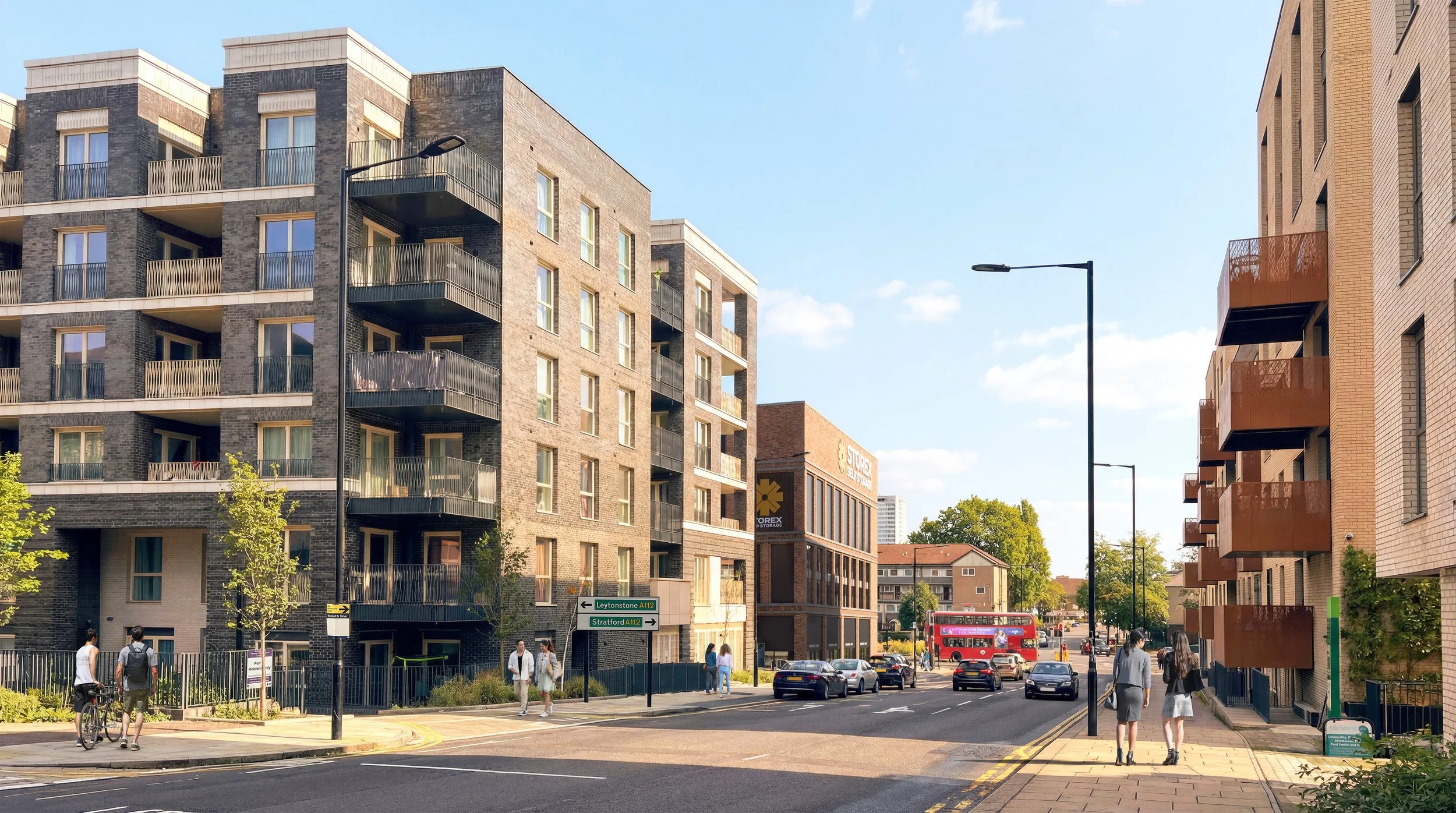
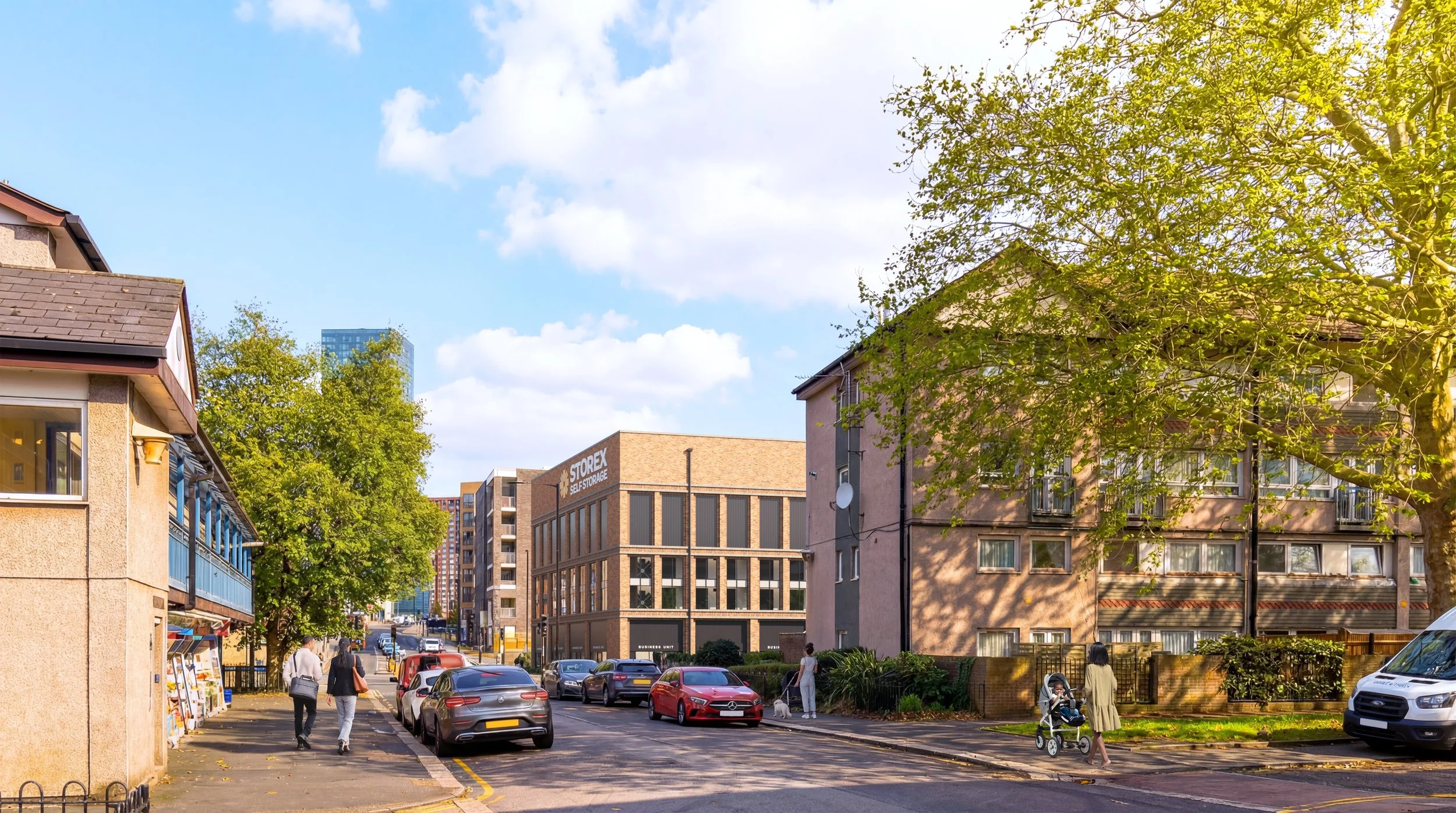
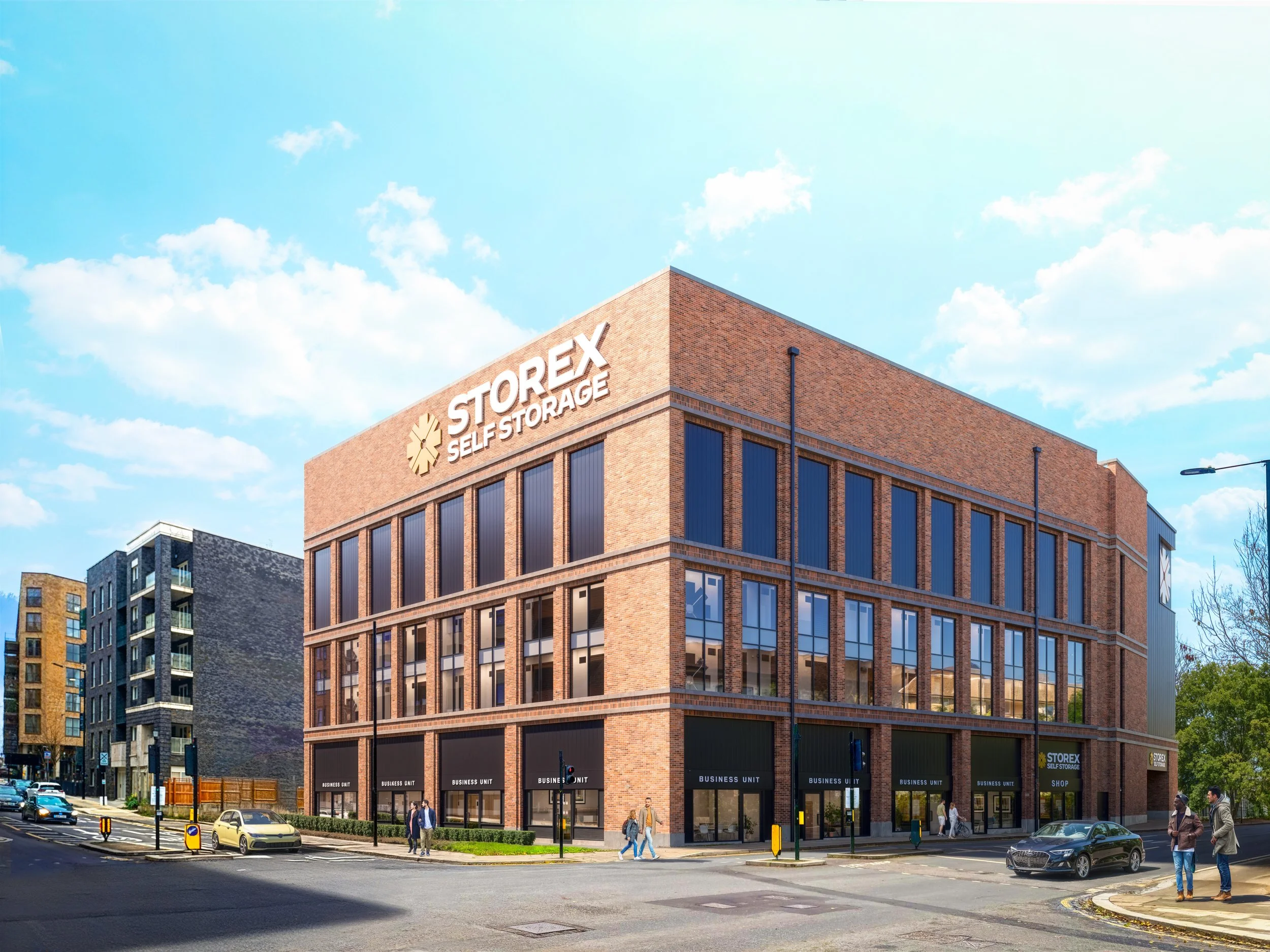
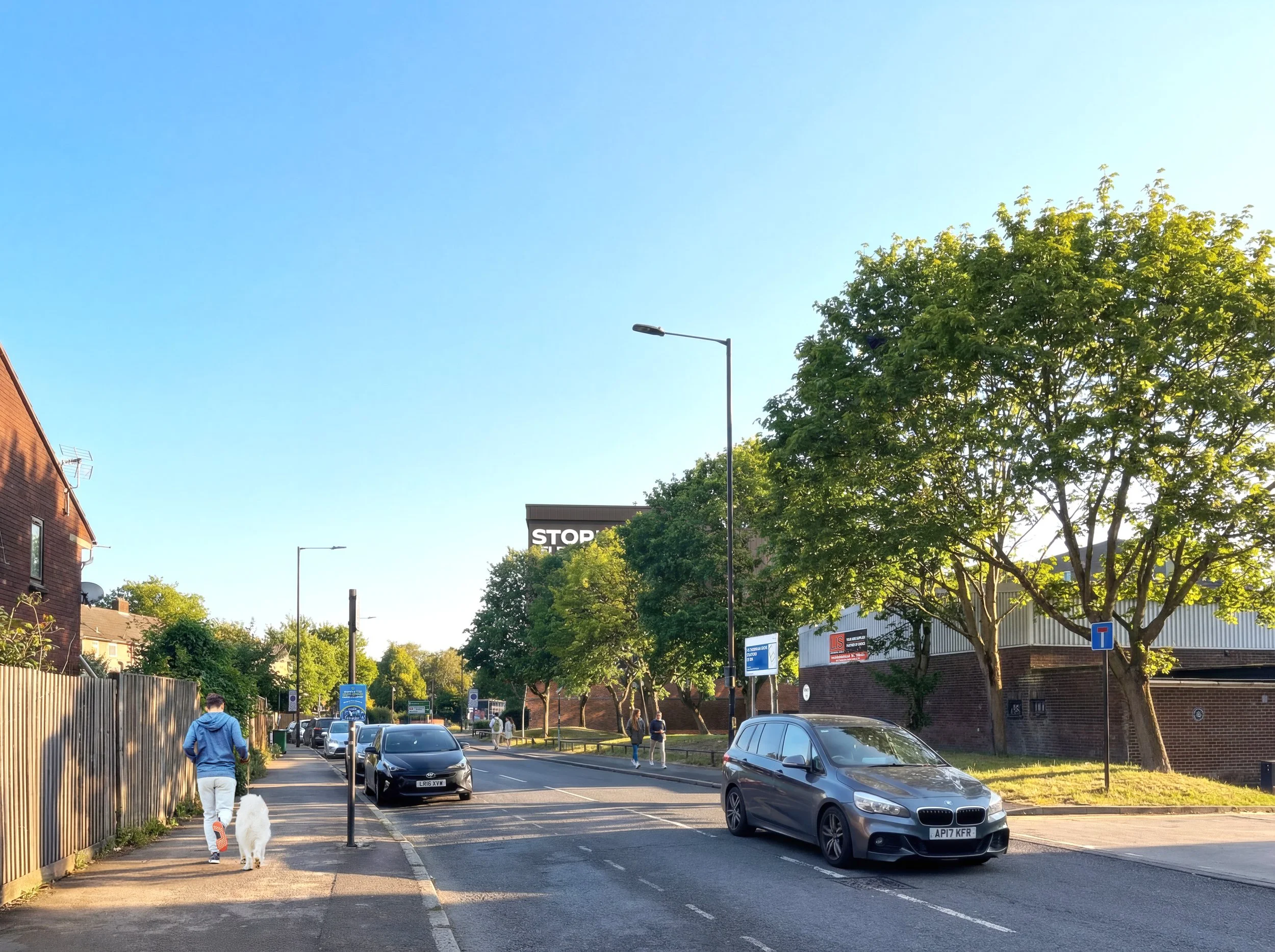
The site occupies a prominent position on the corner of Leyton Road and Penny Brookes Street. Vehicular access to the facility is taken from Leyton Road, utilising an existing crossover to access the secure undercroft and service yard located to the rear of the site. A secondary access is also provided from Penny Brookes Street. The positioning of the STOREX shop and FabLab units along both street frontages ensures that the entire public-facing ground floor maintains an active and engaging relationship with the street.
The building will be used by both self-storage customers and FabLab tenants. The STOREX shop will serve as the main pedestrian entrance for new self-storage customers and users of the FabLab workshops. Secure vehicular and cycle parking is provided beyond the controlled access gate, with direct access to the building and ground-floor units from the undercroft.
Public-facing spaces are designed to provide a warm and welcoming environment through the use of calm, natural materials. The fully glazed shopfront and the managed FabLab workspaces at ground floor are key components in activating the street and reinforcing the building’s presence within the wider streetscape.
A landscaped zone is proposed between the building and the pavement along both Penny Brookes Street and Leyton Road. The landscaped area fronting Penny Brookes Street will be enhanced with trees and seating to create pause spaces for local residents, as well as external amenity space for FabLab users. The landscaping also allows for variations in topography to be rationalised. Overall, the landscape scheme will achieve a minimum Urban Greening Factor (UGF) of 0.4
View from Leyton Road as proposed
3D Visualisations
-
![]()
View from Penny Brookes Street
-
![]()
View from Alma Street
-
![]()
View from Penny Brookes Street / Leyton Road
-
![]()
View from Leyton Road
Proposed Ground Floor Plan
STOREX requires a modern development warehouse with an efficient footprint that responds to the site layout and yard configuration, ensuring the safe and effective movement of vehicles throughout the site. The proposed scheme meets STOREX’s operational requirements by delivering a building of appropriate scale, while also seeking to enhance the quality and function of the surrounding area through a clear access strategy.
Vehicular access to the site is taken from Leyton Road, with emergency access available from Penny Brookes Street. Secure customer parking and loading are provided off Leyton Road within a controlled yard arrangement, with associated pedestrian access from the same location. FabLab tenants can access their units either from Penny Brookes Street or via the main STOREX shop and lobby, ensuring flexibility of movement and clear separation between customer, tenant, and service functions.
An accessible parking bay is located within approximately 8 metres of the customer lobby and within 12 metres of the STOREX shop entrance, providing convenient and inclusive access. New self-storage customers are also able to enter the STOREX reception directly from the undercroft, allowing efficient access between vehicles, the lobby, and storage units.
Ground-floor FabLab units are accessible both directly from the secure yard and internally from the shop entrance, supporting a managed and adaptable operational model.
Cycle parking provision includes a mix of long- and short-stay spaces, with four spaces allocated for cargo bikes, appropriate to the needs of FabLab users and self-storage customers.
Two fire escape routes are proposed, located to the north-east and south-west of the building, ensuring compliant means of escape.
In addition to the self-storage element, the scheme will deliver approximately 353 sqm of light-industrial workshop space, providing a range of commercial units suitable for craft, maker, and small business uses. These units will be centrally managed as part of the wider STOREX offer and form an integral component of the development.
Proposed Elevations
Elevational Composition
The primary elevational considerations focus on the Penny Brookes Street and Leyton Road frontages, given their prominence within the streetscape. The proposed elevations take cues from the Chobham Farm masterplan, forming a coherent urban block with a clear and active frontage along both streets. This approach reinforces the evolving, regular street pattern envisioned in the masterplan.
Design Principles: Brick Detailing
While the Chobham Farm masterplan design guide was written primarily for a residential context, the proposal draws inspiration from it to ensure clarity and legibility in the architectural expression. The overall height broadly aligns with the masterplan, comprising ground plus six storeys.
The façades maintain a consistent rhythm, with zones of subdivision that reflect the internal layout behind. Subtle variations in parapet height and changes in material help to visually break down the massing, albeit in a more restrained manner than the adjacent residential schemes.
Design Principles: Modulation, Setback, Height, and Vertical Division
In line with the design guide, variety has been introduced through detailed brickwork. This includes changes in bonding patterns—header, soldier, and stacked courses— along with vertical articulation to mark stair cores, ventilation zones, and shifts in material. These elements enhance legibility and visual interest across the façade.
Design Principles: Texture, Light, and Shadow
Simple recesses, projections, and variations in brick texture are employed to create depth and shadow, adding richness and subtle movement to the façade. These treatments produce a dynamic play of light and shadow that reinforces the building’s rhythm and texture.
Summary
The design seeks to balance an honest expression of the building’s use with sensitivity to the Chobham Farm Design Masterplan principles for Leyton Road. By referencing local character while prioritising harmony with the environment and urban fabric, the proposal offers a respectful and responsive interpretation of the
building’s function—one that sits comfortably within its context and embeds both social and environmental responsibility throughout the design process.
Material Palette
The materials, textures and colours specified are chosen to reinforce the architectural brand of STOREX. A short description of the palette reasoning is outlined below.
Black
This is an elegant and luxurious colour that has presence. It doesn’t suffer the fashionable trends like bold colours tend to, and its sophistication will contribute to the sense of minimalist elegance in contrast to the brashness of competitors.
Natural
All materials proposed are an untreated natural finish or neutral colour to reinforce the brand values of environmentally conscious design. There is the potential to allow brand colour accents / highlights to contrast and this could be achieved in locations where it is easy to update, i.e. internal finishes.
Brick
A red multi / mixed tone brick will offer a texture and richness next to the clean lines of the black cladding and mill finish steel / aluminium glazing frames etc.
Timber
Warm untreated timber sections or panelling to the shopfront area will contribute to the relaxed welcoming palette and layout of the front of house shop. While this is a small area, it is a big part of the experience and identity for customers.
Curtain Walling
Brushed finished aluminium sections are used to contrast against the black cladding and to emphasis the display, work units and shop windows.
Bio-Diverse Roof
Biodiverse roofs are intentionally designed to support a variety of plant and animal species, enhancing urban biodiversity. Unlike green roofs, which are typically planted with vegetation over a growing medium, biodiverse roofs often utilise materials like gravel, soil, or rubble to encourage self-colonization by native species. This approach not only provides habitats for various organisms but also contributes to the overall health of urban ecosystems.
Key Benefits:
Habitat Creation: Biodiverse roofs serve as valuable habitats for a range of species, including rare plants, insects, and birds. For example, the Laban Centre in London features a brown roof designed to attract the nationally rare black redstart bird.
Stormwater Management: These roofs can aid in managing stormwater runoff by retaining rainwater and reducing the risk of flooding. The materials used in biodiverse roofs can absorb and slow down the flow of water, mitigating the impact on urban drainage systems.
Urban Heat Island Mitigation: By incorporating materials that support vegetation and natural processes, biodiverse roofs can help lower ambient temperatures in urban areas, counteracting the heat retention typically associated with conventional roofing materials.
Air Quality Improvement: The plants and substrates on biodiverse roofs can filter pollutants and absorb carbon dioxide, contributing to cleaner air and aiding in the reduction of greenhouse gas emissions.
Aesthetic and Recreational Value: These roofs can enhance the visual appeal of urban environments and may provide recreational spaces for residents, fostering a deeper connection to nature within city settings.
Incorporating biodiverse roofs into urban planning aligns with sustainable development goals by promoting environmental stewardship and enhancing the quality of life in cities.
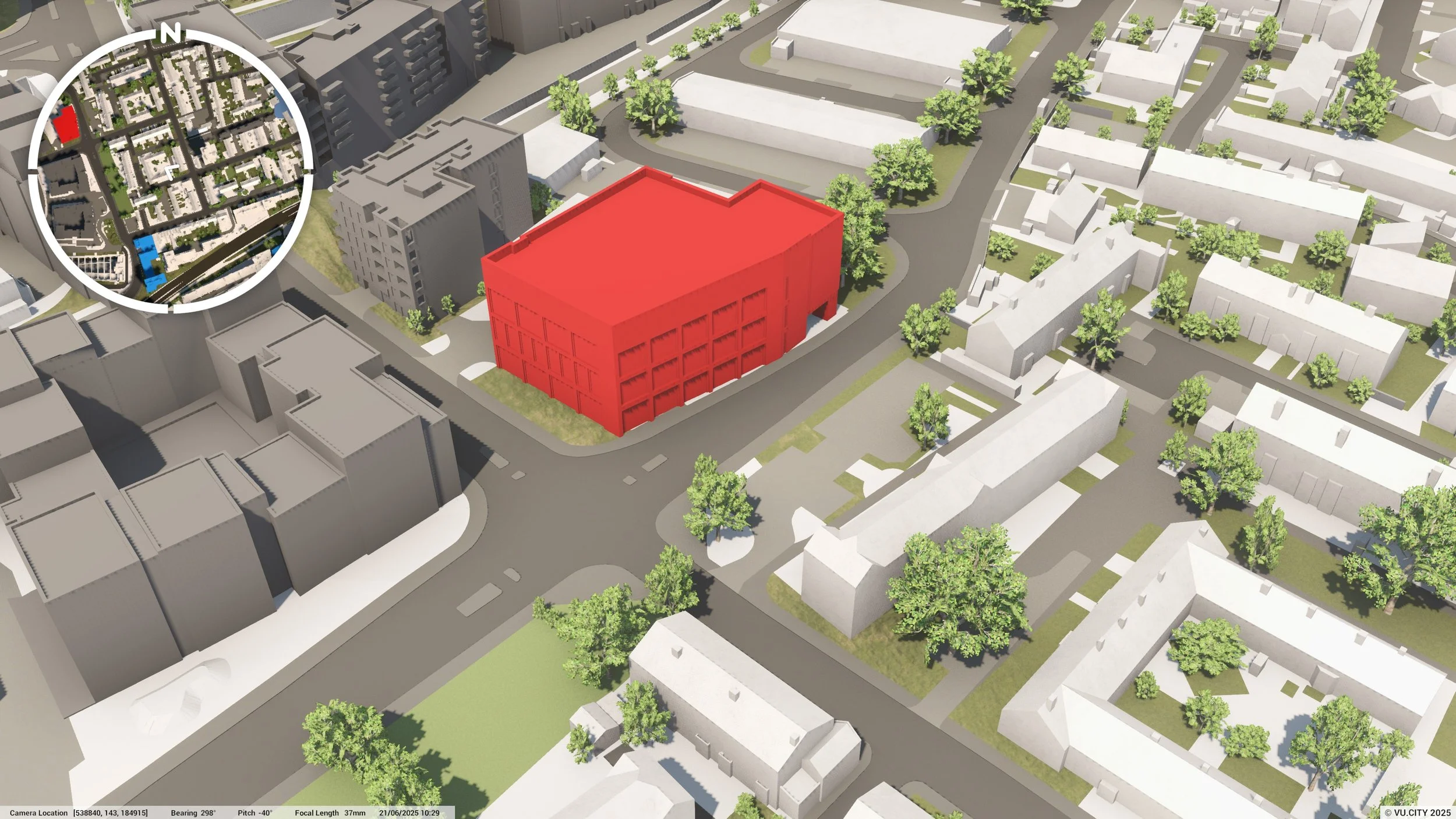
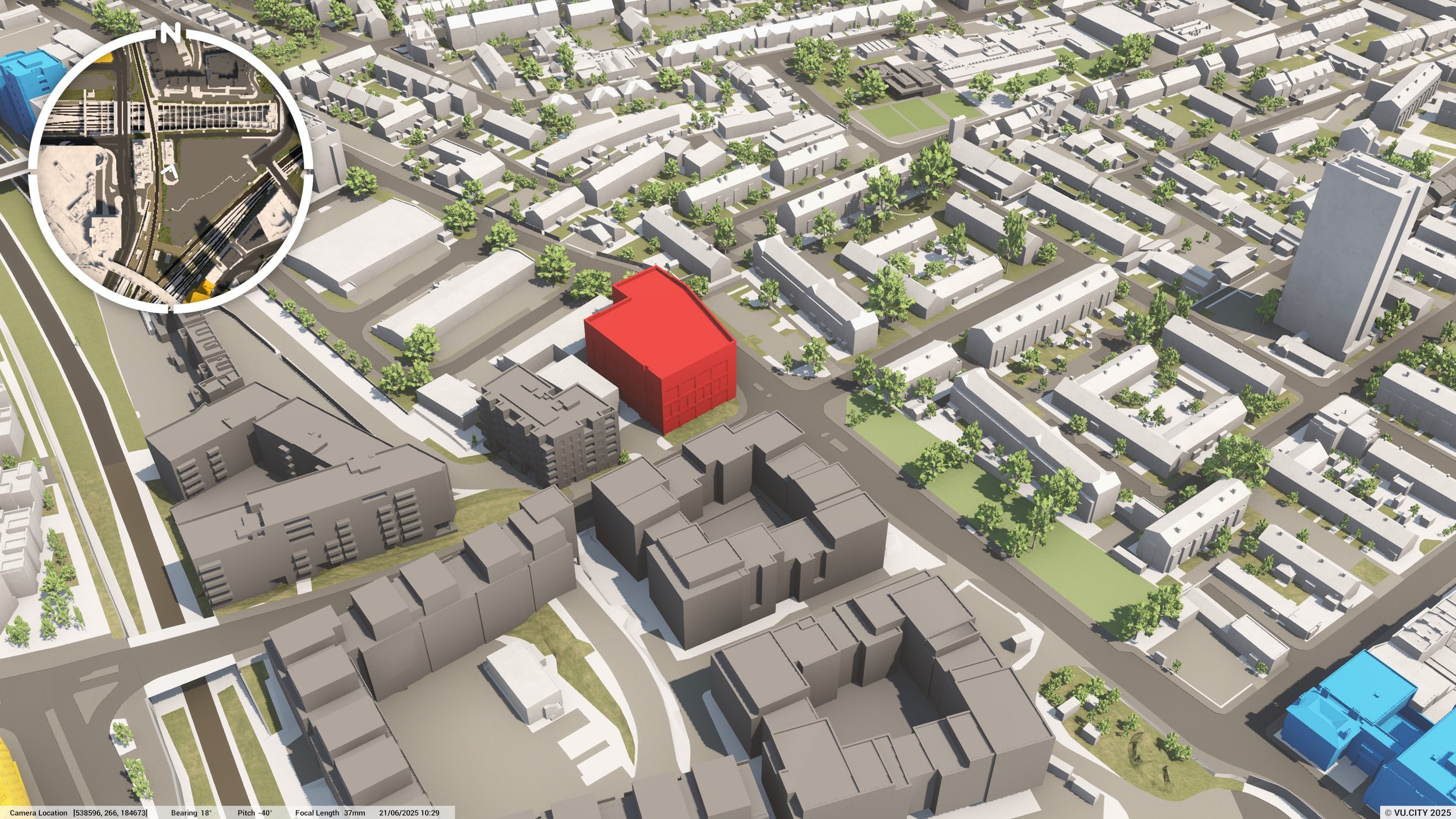
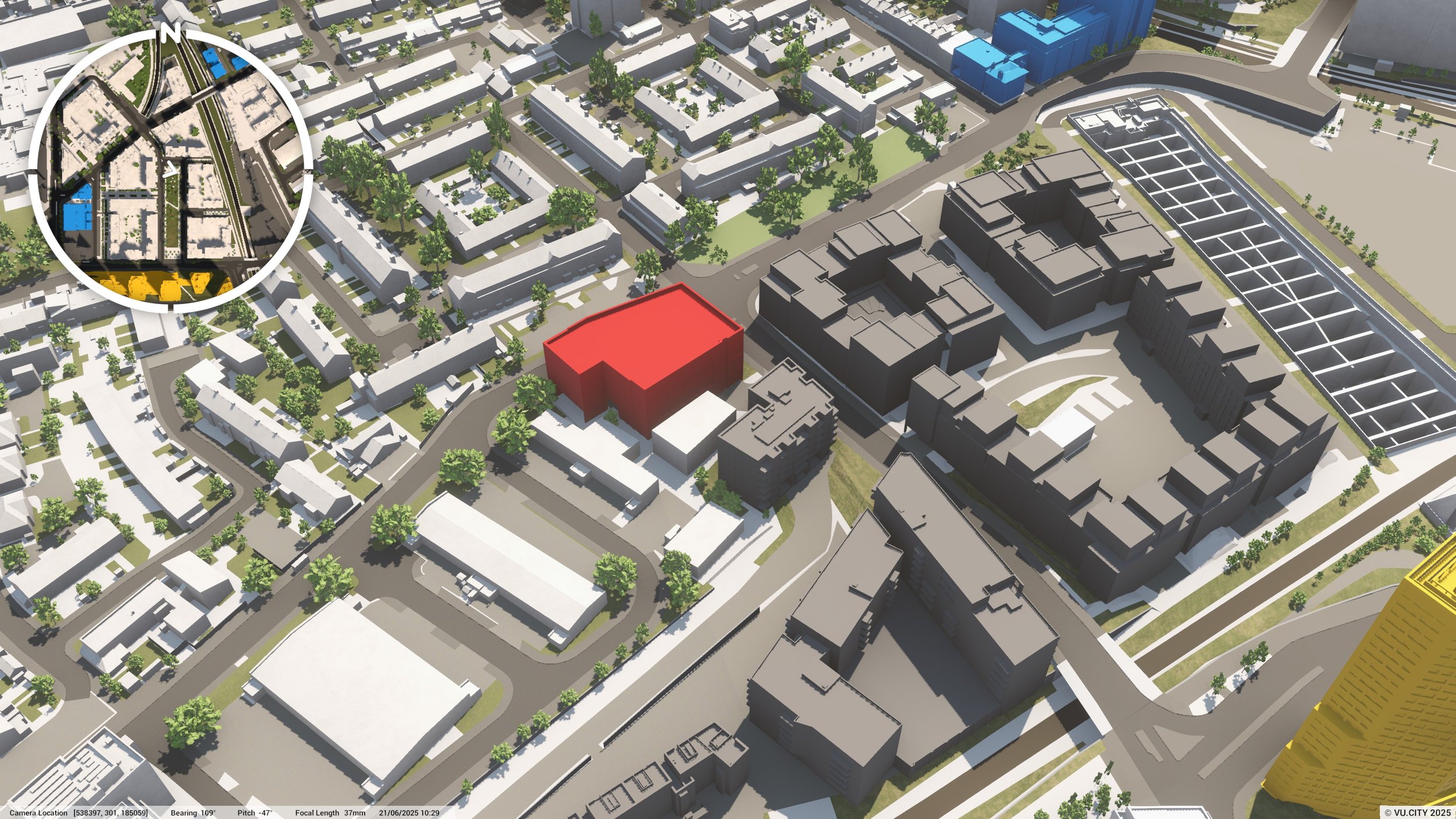
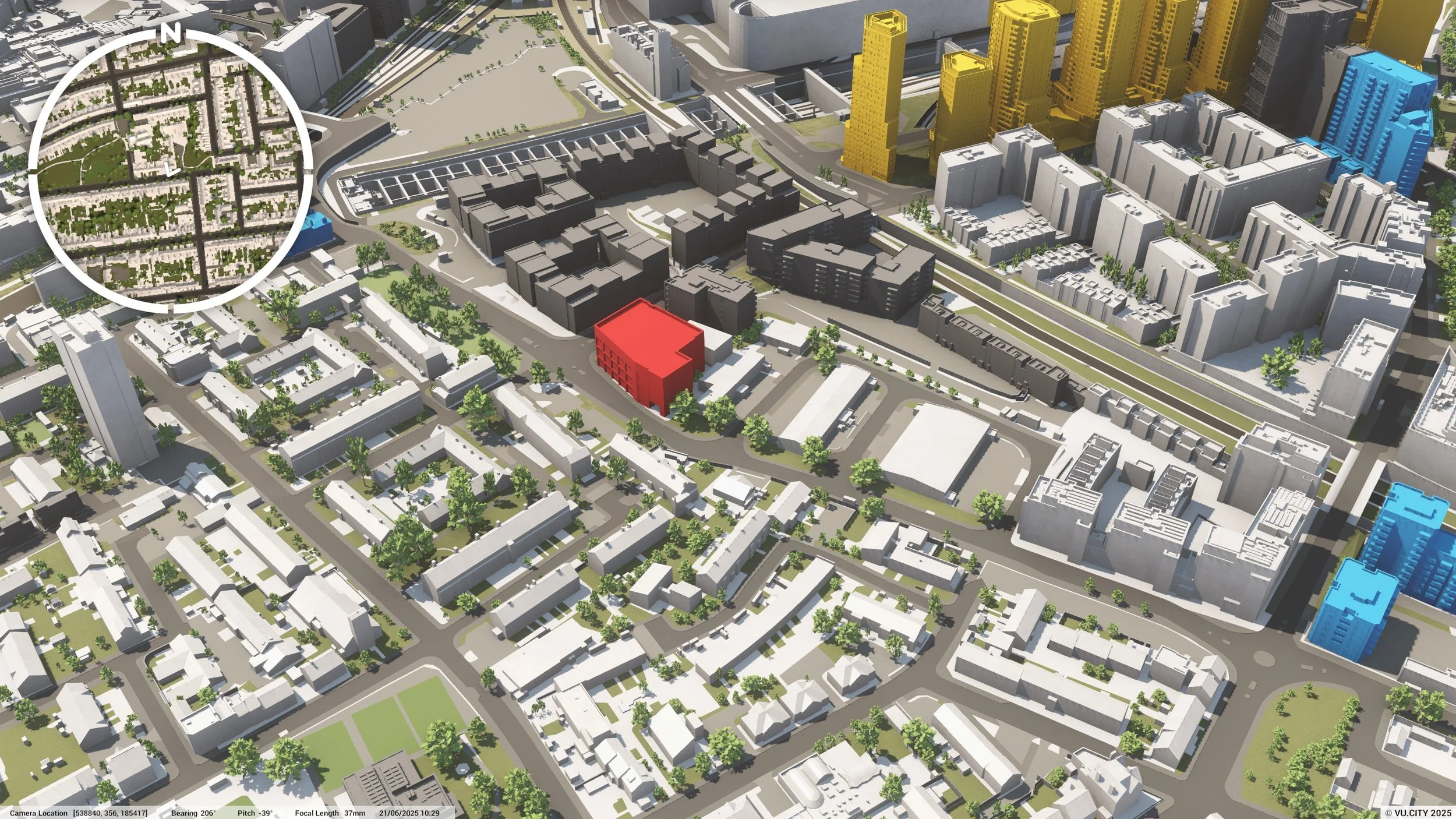
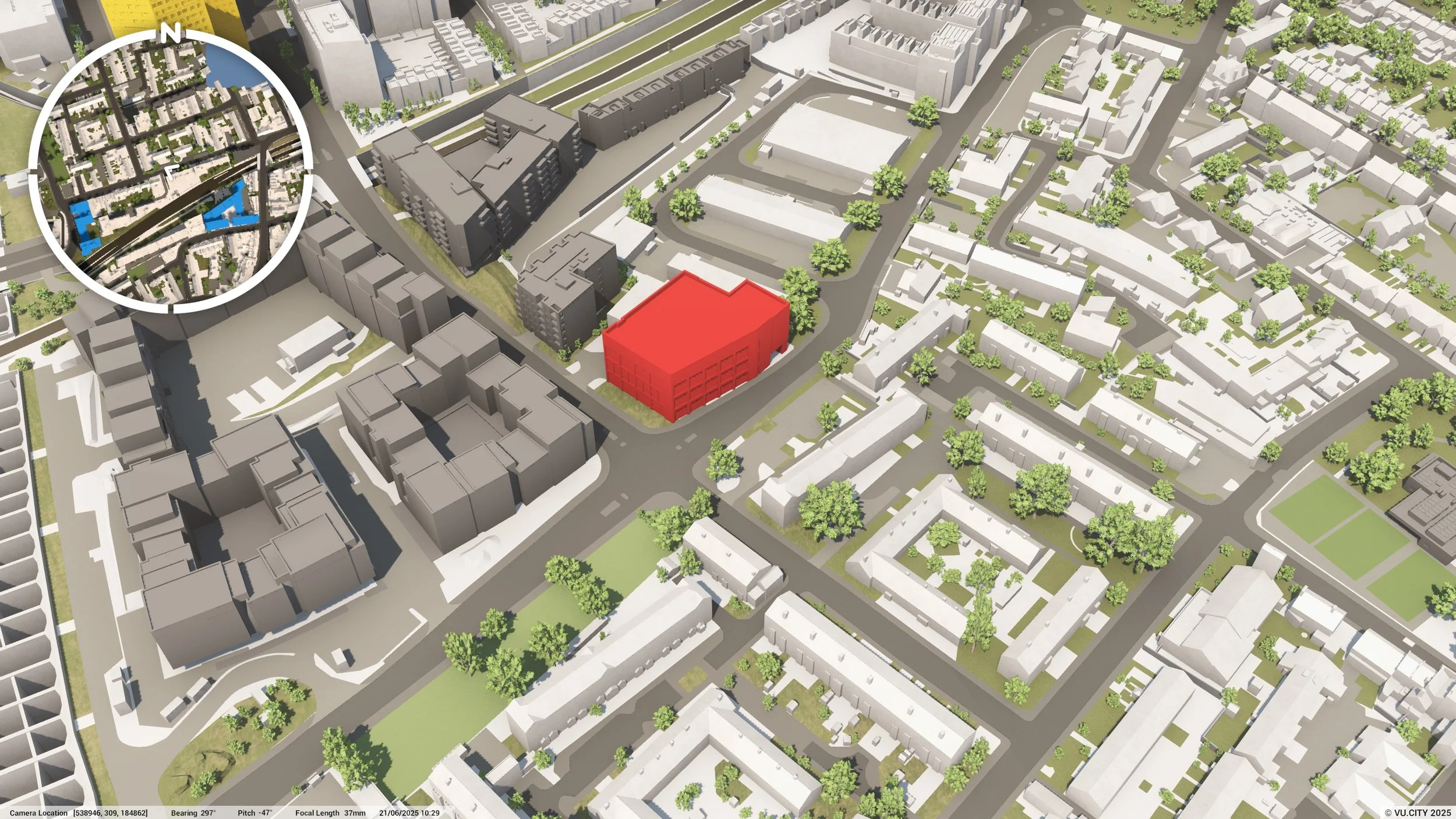
Building Massing
-
![A 3D cityscape rendering with a red building at the center, surrounded by residential houses, trees, and streets, with a small inset map showing the location.]()
Looking North West
-
![3D digital map of an urban area showing buildings, streets, and green spaces with a highlighted red building, a blue building, and a circular inset map in the top left corner for location reference.]()
Looking North East
-
![A 3D city model showing various buildings, streets, and green spaces with a highlighted rectangular building in red near the center.]()
Looking South
-
![Aerial view of a city block with a red building in the center, surrounded by residential homes, commercial buildings, and streets lined with trees. City skyscrapers are visible in the background.]()
Looking South West
-
![3D city map highlighting a red building among gray and white structures, with surrounding streets and greenery.]()
Looking North West